Understanding the Odds: A Guide to Casino Math
Casino gaming is as much about chance as it is about strategy. Whether you’re captivated by the spinning roulette wheel, the tension of a blackjack hand, or the ringing of slot machines, every casino game is governed by a fundamental principle: math. For many, the inner workings of casino odds remain mysterious, sometimes even intimidating. Yet, understanding the basics of casino math can transform your gaming experience, helping you play smarter and more confidently. In this guide, we’ll break down key concepts, explain how odds are calculated, and reveal the mathematical backbone that keeps casinos running—and players entertained.
The House Edge: The Foundation of Casino Profitability
One of the most critical concepts in casino math is the "house edge." Simply put, the house edge is the average percentage of each bet that the casino expects to keep over the long run. This mathematical advantage is built into every game, ensuring that casinos are profitable regardless of short-term luck.
For example, in American roulette, there are 38 pockets (numbers 1-36, plus 0 and 00). If you bet on a single number, your chance of winning is 1 in 38. The payout is 35 to 1, but the true odds are 37 to 1. This difference—however small—ensures the house makes money over time.
.png)
Let’s look at the house edge for popular casino games:
- American Roulette: 5.26% - European Roulette: 2.70% - Blackjack (with basic strategy): 0.5% to 1% - Baccarat (banker bet): 1.06% - Slot Machines: 2% to 15% (varies greatly)A lower house edge means better odds for the player, but no casino game offers zero house edge. It’s this small margin that makes the glittering lights of Las Vegas and Monte Carlo possible.
Probability: The Mathematics of Chance
Probability is the branch of mathematics that deals with the likelihood of an event occurring. In casinos, it defines the odds of every outcome, from hitting a royal flush in poker to landing three cherries on a slot machine.
Consider the classic game of blackjack. A standard deck has 52 cards, and the probability of being dealt a blackjack (an Ace plus a 10-value card) is approximately 4.83%. In roulette, the probability of the ball landing on any single number in American roulette is 1/38, or about 2.63%.
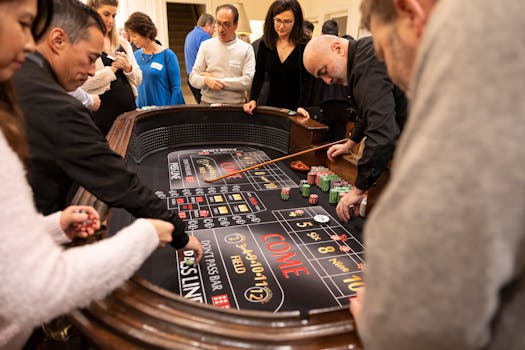
Understanding probability helps players make informed decisions. For instance, in craps, the chance of rolling a 7 with two dice is 16.67%, the highest probability for any roll. This explains why the “Pass Line” bet, which wins on a 7 or 11, is so popular.
The more you understand probability, the more you’ll appreciate the design of casino games. Every rule, payout, and side bet is carefully crafted to balance excitement with profitability.
Return to Player (RTP) vs. Volatility: Decoding Slot Machines
Slot machines are the most popular casino games worldwide, accounting for about 70% of casino revenue in the United States. Two key mathematical concepts dominate slot play: Return to Player (RTP) and volatility.
- RTP is the theoretical percentage of all wagered money a slot machine will pay back to players over time. For example, a slot with a 96% RTP will, on average, return $96 for every $100 wagered—over thousands or millions of spins. - Volatility (or variance) measures how often and how much a slot pays out. High-volatility slots offer bigger, but less frequent, wins. Low-volatility slots deliver smaller payouts more regularly.Here’s a comparison of RTPs and volatility levels for common slot types:
| Slot Type | Average RTP (%) | Volatility |
|---|---|---|
| Classic 3-Reel | 93-96 | Low |
| Video Slots | 95-97 | Medium |
| Progressive Jackpot | 88-94 | High |
While RTP gives a long-term expected return, volatility affects your experience in the short term. Choosing the right combination depends on your risk tolerance and playing style.
Payout Ratios and True Odds: Knowing What You’re Paid
Casinos often display enticing payouts, but these rarely match the actual odds of winning. This difference, known as the “payout ratio,” is key to understanding casino math.
Let’s take roulette as an example. A straight-up bet on a single number pays 35 to 1. However, the true odds (in American roulette) are 37 to 1 against you. The payout falls short of the true odds, creating the house edge.
In blackjack, a natural blackjack pays 3 to 2. If a casino pays only 6 to 5, the house edge increases significantly. In 2022, a study found that switching from 3:2 to 6:5 payouts adds about 1.4% to the house edge—costing players an extra $14 per $1,000 wagered over time.
Understanding payout ratios helps you spot better bets and avoid those with inflated house edges. Always check the payout before placing any wager, especially in table games where rules can vary from one casino to another.
Combinatorics: Counting the Possibilities
Combinatorics is a branch of mathematics dealing with counting and arrangements. It’s essential for understanding card games like poker and blackjack, where the order and combination of cards matter.
For example: - In poker, the odds of being dealt a royal flush are 1 in 649,740. - In blackjack, the probability of being dealt a pair (two cards of the same rank) is about 7.45%.Casinos use combinatorial math to calculate the odds of side bets, bonus games, and special payouts. Players can use these calculations to evaluate which bets offer the best value.
Let’s see an example: In Texas Hold’em, there are 2,598,960 possible five-card hands from a standard deck. Knowing these numbers allows you to gauge the rarity—and value—of your hand.
Misconceptions and Gambler’s Fallacy: Separating Fact from Fiction
Casino math is often misunderstood, leading to myths and mistakes that can cost players money. One of the most common is the gambler’s fallacy—the belief that past outcomes affect future results in games of chance.
For example, if a roulette wheel lands on red five times in a row, many players wrongly believe black is “due” next. In truth, each spin is independent, and the odds remain the same every time: 18/38 for red, 18/38 for black, and 2/38 for green (0 and 00) in American roulette.
Another misconception is that slot machines are “hot” or “cold.” In reality, slots use a random number generator (RNG) that ensures every spin is independent and unpredictable.
Understanding the math behind these games helps you avoid costly mistakes and focus on strategies that truly improve your experience.
Final Thoughts: Using Casino Math to Play Smarter
Casino math is the invisible force shaping every game, payout, and rule on the gaming floor. While luck will always play a role, understanding the underlying mathematics empowers you to make smarter choices. By grasping concepts like the house edge, probability, RTP, and payout ratios, you’re no longer relying solely on chance—you’re playing with knowledge on your side.
Remember: No strategy can overcome the house edge in the long run, but being aware of the math lets you enjoy gaming responsibly, avoid common pitfalls, and maximize your entertainment. Whether you’re spinning the slots, doubling down in blackjack, or betting on the roulette wheel, a little math can go a long way.